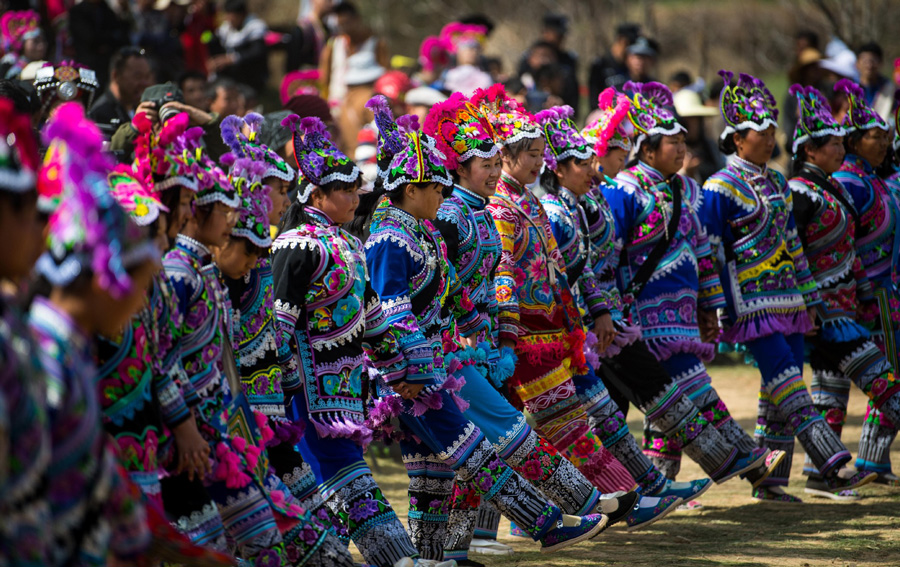
Lezuo Dance
Introduction
The lezuo dance is a traditional folk performance that integrates music, song and dance, cherished by the Hani and Yi ethnic groups. It is primarily practiced in the villages of Honghe county, located in Honghe Hani and Yi autonomous prefecture in Yunnan province.
The name "Lezuo" translates as "everyone dancing together" ("Le" meaning "everyone" and "Zuo" meaning "to play or jump"). This communal dance form is notable for its inclusivity and adaptability, allowing it to thrive as a vibrant expression of cultural unity and celebration.
History
The origins of the lezuo dance can be traced back over a century, deeply rooted in the customs of the Hani and Yi communities. Traditionally, it served as a medium for communal bonding, particularly during festivals, weddings, and harvest celebrations. The dance has evolved over generations, retaining its essence while adapting to contemporary contexts. Despite its enduring popularity within its cultural heartlands, modern influences and insufficient preservation efforts have placed this art form under threat.
Features
The lezuo dance is characterized by its flexibility - it can be performed without restrictions on time, location, or the number of participants. However, its execution follows a structured sequence. The performance begins with lyrical singing accompanied by a live band. The musicians, while not participating in the dance itself, enhance the atmosphere by swaying to the rhythm and contributing exuberant vocal harmonies.
The dancers, usually in even numbers, form a circle and move with grace and fluidity, interspersing pauses with dynamic motions. They clap hands, cross paths, or spin individually, yet always maintain the circular formation. Their movements are refined and gentle, with arms fluttering like dragonfly wings and knees flexing rhythmically. The choreography is intricate, with diverse yet cohesive steps, embodying the distinctive aesthetic of the Hani and Yi cultures.
Cultural Significance
The lezuo dance holds profound cultural value for the Hani and Yi peoples. Beyond its role as an art form, it acts as a social conduit, fostering connections among individuals and communities. Historically, it has played a pivotal role in promoting interethnic harmony in the border regions of Yunnan. Its melodies and movements encapsulate the shared history, traditions and aspirations of the Hani and Yi ethnic groups, making it a symbol of cultural resilience and unity.
Preservation
Despite its rich heritage, the lezuo dance faces challenges in the modern era. The influx of external cultural influences and the lack of comprehensive protective measures have led to its decline. Efforts are needed to document, teach and revive this dance to ensure its continuity. Initiatives such as integrating it into school curriculums, organizing cultural festivals, and encouraging intergenerational transmission can play a critical role in its preservation. Local governments and cultural organizations are increasingly recognizing its importance, working to safeguard this irreplaceable cultural treasure for future generations.
The lezuo dance is more than an artistic expression; it is a testament to the enduring spirit of the Hani and Yi peoples. Its preservation is essential not only for maintaining cultural diversity but also for celebrating the unity and creativity inherent in human traditions.








